California Remembers
The Origins — From the First Peoples to 1900
1 of 3
Series
8 Featured
Native Nations
Tongva / Kizh
Spotlight
Coming Soon
Parts 2 & 3
“California Remembers” is a three-part live musical series that traces the cultural and musical history of California. Part One, “The Origins,” begins with the more than one hundred Native nations who first sang and danced on this land — their songs, their dances, their live music of clapper sticks, gourd rattles and voice — then turns a close spotlight on the Tongva (Kizh), the original people of the Los Angeles Basin, before moving through the brief Spanish, Mexican and American eras into the turn of the twentieth century.
Parts Two and Three — the American century of sound, and California today — are coming soon. This is not a concert. It is a living story, told through the dances and the live music of the land.
Mood Board
The visual world of California Remembers: a cinematic journey through four eras, graded in deep teal-black, copper and bone — from the oldest dawn of the Coachella Valley to the lamplit turn of the century.
Palette
· Midnight Agave & Copper DustMidnight Agave
#1B1410
Sandstone
#2C241D
Copper Dust
#D4AF37
Bone
#F6EEDF
Typography
California
Remembers
Playfair Display · Display
A story-first libretto in four acts — the story of each era told first by the Narrator, then sung by the people who lived it.
Inter · Body
Act One · Before 1769
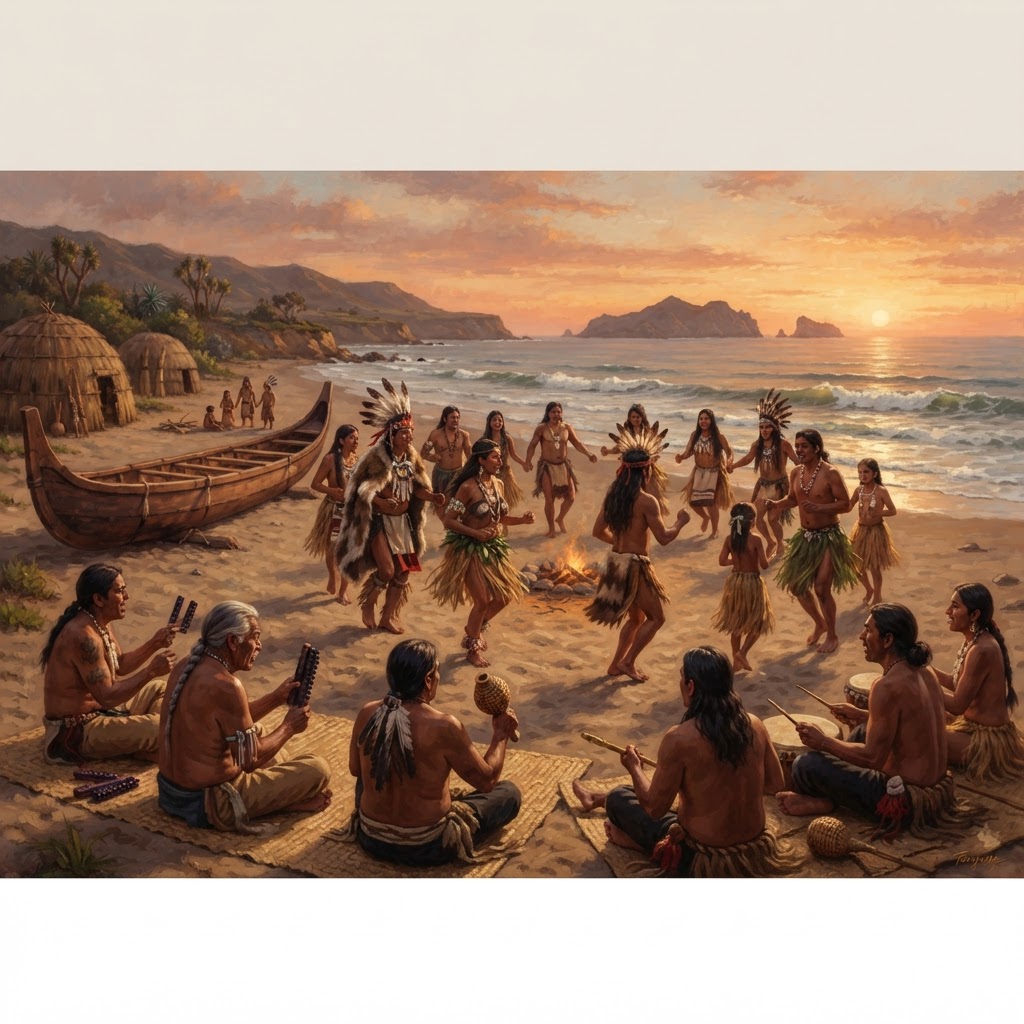
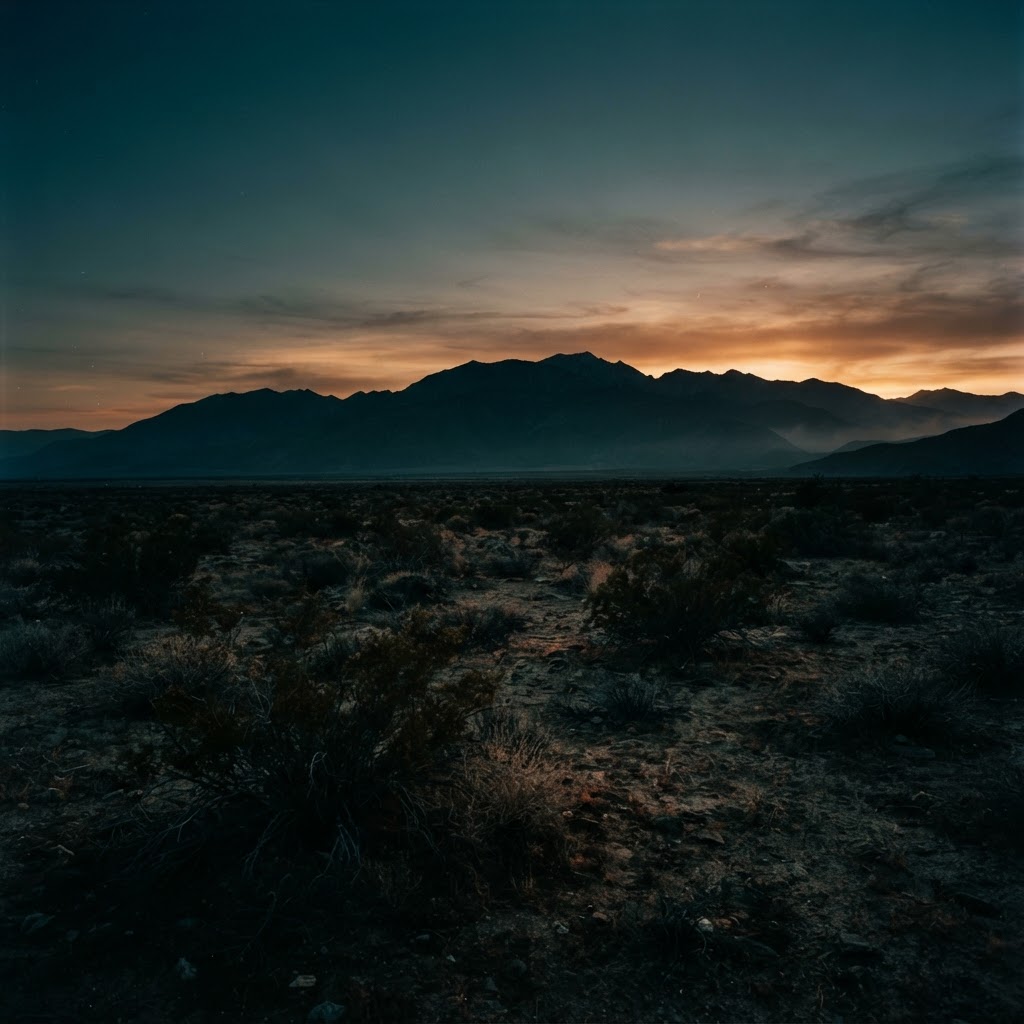
The First Peoples
The oldest morning. Silence, then a single rattle. The valley before any flag.
Act Two · 1769 – 1821
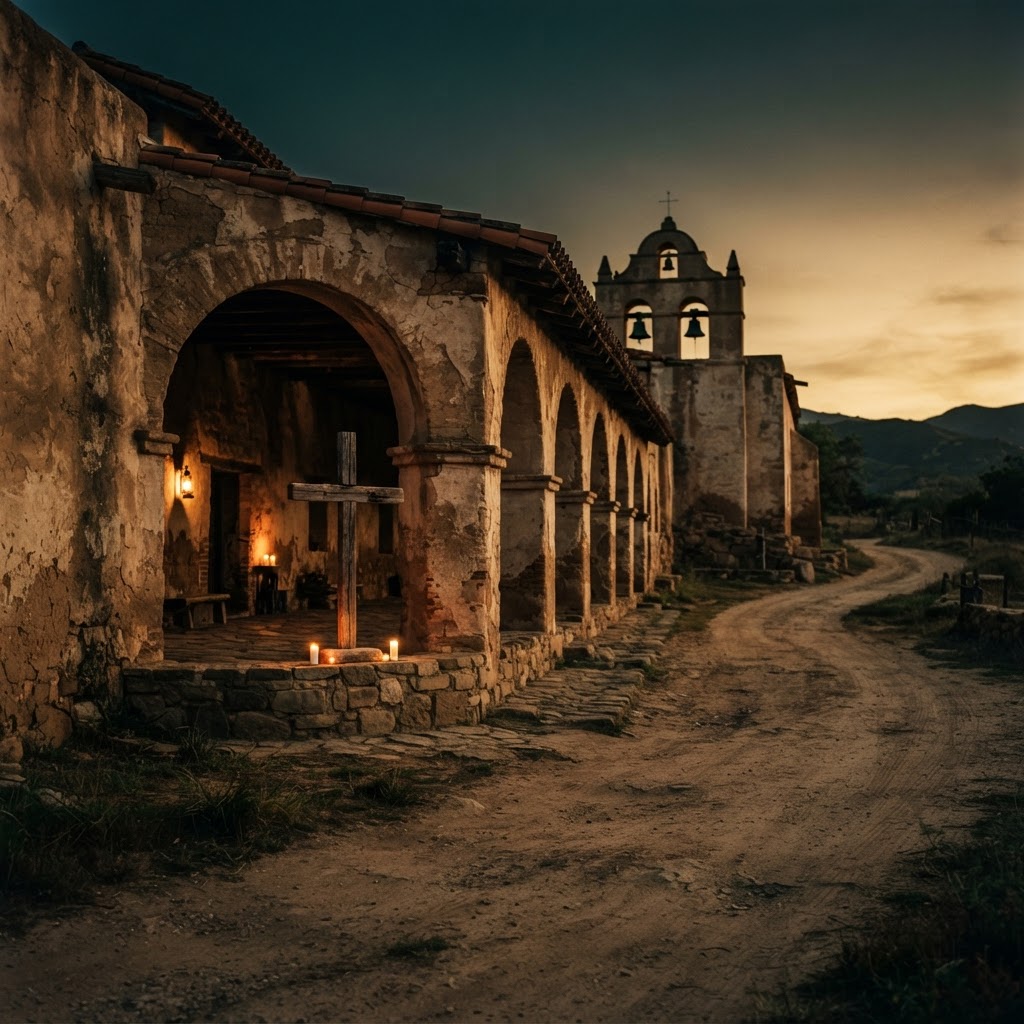
The Spanish Crown Descends
A road up the coast, a bell, a cross. Spain arrives in candlelight and guitar.
Act Three · 1810 – 1846
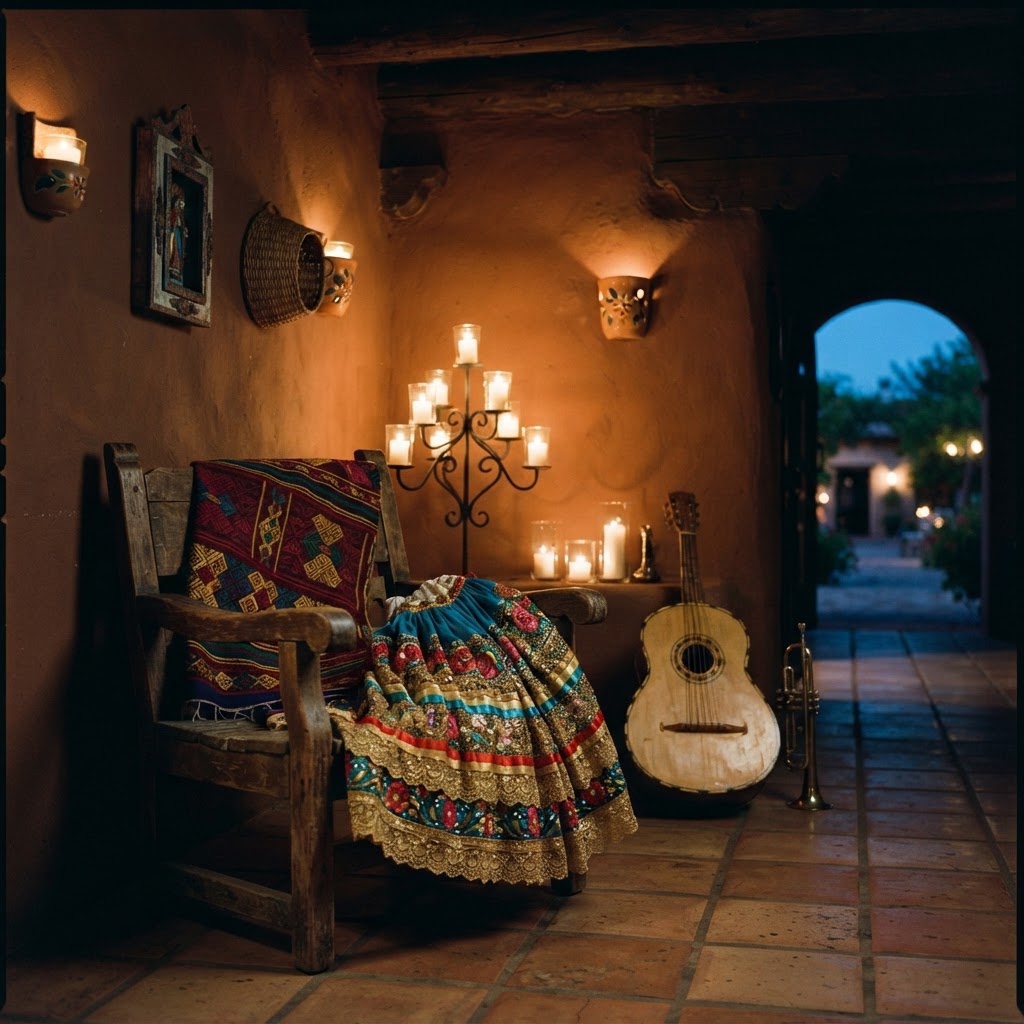
¡Viva México!
A free rancho, a fiesta at dusk. The trumpet calls and the mariachi answers.
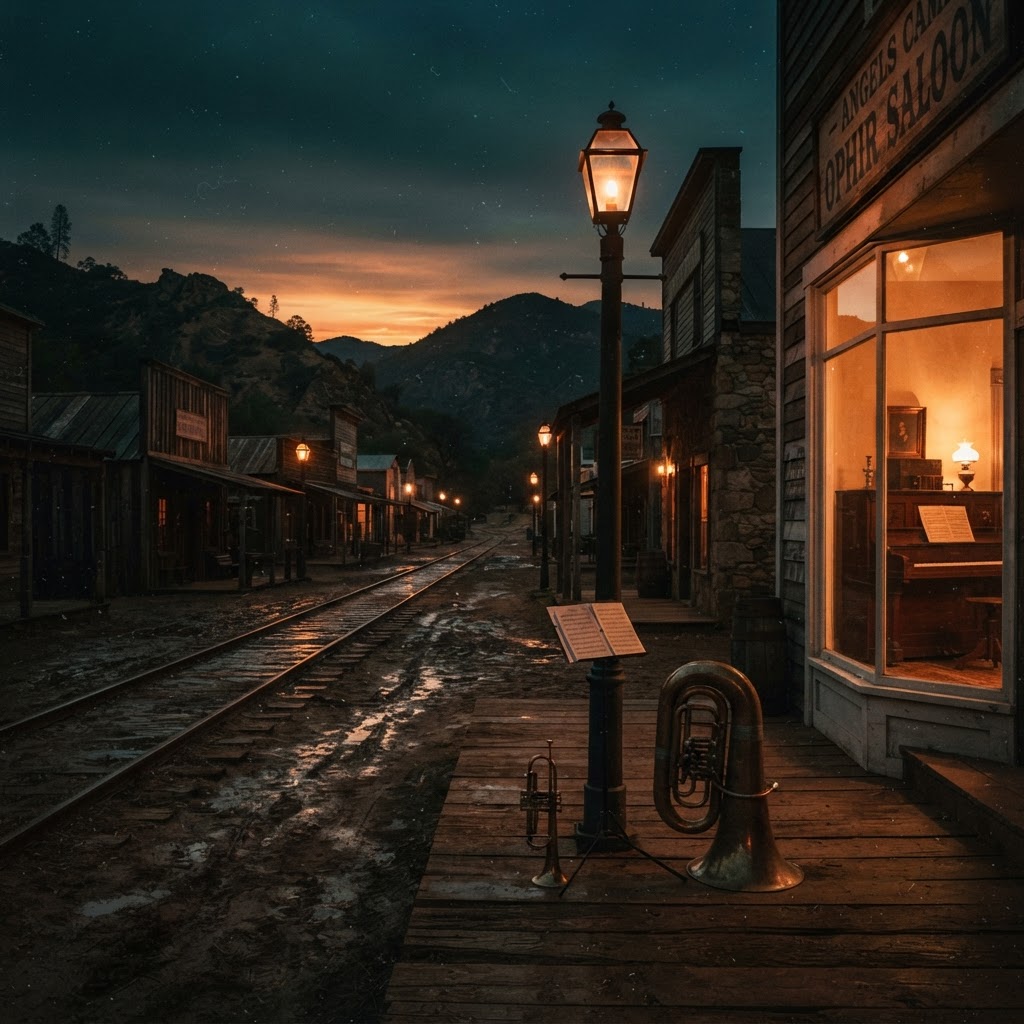
Act Four · 1846 – 1900
A New Land Takes Root
Bugles, then gold, then the railroad. A modern state rises by lamplight.
Texture & Light
- ·Subtle film grain across every frame
- ·A single warm source of light in a field of shadow
- ·Copper string-light and candle-glow, never neon
- ·Open negative space — the land is the largest character
The Libretto
A story-first musical libretto in four acts — the story of each era is told first by the Narrator, then the curtain parts and the people of that era sing their own story in their own music, from the first peoples through the Spanish and Mexican eras to the American invasion and the rise of a modern state in the year 1900. Press play on an act to hear the narration.
CALIFORNIA REMEMBERS
A Musical Libretto in Four Acts
Story, Scene & Song
Mariachi Bands of the Desert, LLC
Note on the Narrator
This production is carried by a single spoken voice: THE NARRATOR. One performer, one microphone, stage right at a lectern, in a black formal suit with a copper boutonniere. The Narrator opens every scene — telling the audience what they are about to see and why it matters — before a note of music is heard. No other spoken voice is heard in the show. All else is music and dance.
The Principle
This is a libretto, not a setlist. The story is the skeleton; the music hangs on the story, not the other way around. Each scene opens with the Narrator, who tells the audience what they are about to see and why it matters — only then does the curtain part and the music begin. Within a scene, each people sings its own song, and only its own song: the music must belong to the people and to the moment. No dance is inserted that does not belong to that people and that place — a rain dance has no place in the Cahuilla Bird Song, and the Bird Song has no place in the mission patio. The audience should always understand, first, what they are witnessing.
ACT ONE
The First Peoples
The songs of the land before any flag
The Scene
PITCH BLACK. No music yet — only silence and the dark. A single warm pool of amber light rises on the NARRATOR, standing center stage at a lectern set slightly forward, in a black formal suit with a copper boutonniere. Behind the curtain, nothing is seen. The narrator speaks the first words of the evening into the stillness. When the narration ends, the stage light opens and the curtain parts to reveal the Coachella Valley at first light — Mount San Jacinto rising to the south, the desert floor, the mouth of Tahquitz Canyon — projected across the full upstage scrim, soft and vast. Downstage, the Cahuilla Bird Singers are seated in a circle on the bare earth, woven gourd rattles and split-elderberry clapper sticks in their hands, faces lit by a low amber wash. The mood is reverent, unhurried, ancient — the oldest morning on the oldest land.
The Narrator
“Long before the word California was ever spoken, this land was already full of song. The Cahuilla people settled here more than two thousand five hundred years ago, into what we now call the Coachella Valley — into Tahquitz Canyon and the shadow of Mount San Jacinto. We stand on their land tonight. We put on our performances here, and too often we do not stop to acknowledge where the land came from, or whose songs were the first songs to rise from it. So we begin there. Before any flag, before any mission, before any border, more than one hundred nations sang and danced across the country we now call California. Each people had its own music, its own dance, its own reason to sing. Tonight we cannot sing them all — there were too many, and much has been lost. But we can honor a few, and we can let them tell their own stories, in their own voices, through the music that is theirs. This is the first story: the story of the first peoples, and the songs they sang on this land long before anyone came to take it from them.”
Musical Numbers
Cahuilla Bird Singers — gourd rattles & split-elderberry clapper sticks
The oldest music of the desert, sung through the long night in Tahquitz Canyon.
The Bird Song cycle is not a concert piece; it is a sacred narrative. Sung from dusk to dawn, it tells the story of the people's creation and their journey across the land — every verse a step of that journey, every rattle a heartbeat. The singers sit in a circle; the dancers shuffle a slow orbit around them. This is the Cahuilla telling their own story, in their own way, with the music that belongs to them and to no one else.
Note: Only the Bird Song belongs in this moment. No other ceremony, no invented dance — this segment belongs entirely to the Cahuilla and their cycle. A rain dance, for instance, has no place here; it belongs to a different people and a different purpose.
Tongva (Kizh) Singers — woven rattles & voice
The original people of the Los Angeles Basin; their village of Yangna stood where downtown Los Angeles stands today.
The Tongva sing with woven rattles and voice, their songs carrying the memory of the basin — the rivers, the plain between the hills and the sea. This is the music of the people on whose land the city of Los Angeles was later built, and whose name the city rarely remembers to speak.
Chumash Whistles & Clappers
The songs of the plank canoe, sung between the mainland and the Channel Islands.
The Chumash built the tomol, the sewn-plank canoe, and paddled it across the channel to the islands. Their songs of the crossing — whistles and clappers over the water — tell the story of a people whose world was the sea as much as the land.
Miwok & Maidu Masked Dancers
The roundhouse ceremonies of the Sierra foothills.
In the semi-subterranean roundhouse, masked dancers of the Miwok and Maidu performed the Kuksu, the Big Head and the Coyote — dances that renewed the world and held the people together through the winter. The dance is the prayer; the mask is the ancestor.
Karuk, Yurok & Hupa River Peoples
The White Deerskin Dance and the Jump Dance on the salmon rivers of the northwest.
On the Klamath and the Trinity, the Karuk, Yurok and Hupa held the World Renewal ceremony — the White Deerskin Dance and the Jump Dance — to set the world right again and to welcome the salmon back to the river. It is among the oldest continuing ceremonies in North America.
Cahuilla & Kumeyaay Singers
The songs of the eagle and the deer, sung at the center of the circle.
The songs of the eagle and the deer — the hunters' and the healers' songs of the southern desert, sung by the Cahuilla and Kumeyaay at the heart of the circle. The eagle is the messenger; the deer is the gift.
Pomo Singers — clapper sticks & hand games
The songs of the acorn harvest, the staple food of the California peoples.
The Pomo sang the acorn harvest from gathering to grinding — the cracked, leached and ground acorn that fed the peoples of the coast ranges, set to the snap of clapper sticks and the wit of the hand game.
All Dancers & Singers
The closing circle of the first peoples.
Every dancer and every singer honored in this act joins the orbit — the great closing circle of the first peoples, the oldest gesture of community on this land. The rattle fades. The light fades. The first story ends, and a new sound — a Spanish guitar — begins to rise from the wings.
ACT TWO
The Spanish Crown Descends
The cross, the soldier, and the guitar
The Scene
A Spanish guitar plays softly in the dark — a single thread of sound, the first European music on this stage. The NARRATOR steps to the lectern. As the narration closes, the scrim fills with the image of El Camino Real — the dusty mission road, the bell towers strung along the coast like beads on a rosary. Brown-robed Franciscan friars and soldados de cuera in leather jackets cross the stage; a wooden cross is raised; a mission bell tolls once. The mood shifts from the ancient and the open to the enclosed, the liturgical, the European. A wooden tablao is set downstage so the heel-work to come will ring.
The Narrator
“On the sixteenth of July, 1769, the Franciscan friar Junipero Serra founded Mission San Diego de Alcala — the first of twenty-one Spanish missions strung along the road called El Camino Real. Gaspar de Portola's overland expedition brought the soldados de cuera, the leather-jacket soldiers, and the brown-robed friars up from Baja California into the land of the Cahuilla and the Tongva. For fifty-two years the Spanish crown ruled Alta California. The missions were built with Native hands and Native labor; the friars baptized and conscripted the peoples of the land, and taught them new songs — the plainsong of the Church, and the dances of old Spain. Along with the cross and the soldier, Spain brought the guitar, the violin, and the fandango. This is the second story: a new flag, a new god, and a new sound arriving on a road up the coast — and the first peoples made to sing in a language not their own.”
Musical Numbers
Mission Choir (Friars)
The hymn of praise — the plainsong of the mission.
The alabado, the hymn of praise, sung in brown robes at the foot of a wooden cross — the first European music to take root in California, taught to the Native neophytes in the mission choirs.
Mission Choir (Native Neophytes)
The polyphonic sacred music of the missions.
The friars taught the Native converts to sing in parts; the choirs of San Juan Bautista and other missions carried polyphony across Alta California. It was Native voices, in a European form, singing a European God — the first fusion of two musical worlds on this land.
Guitar, Violin & Dancers
The great social dance of Spanish California, on the packed-earth patio.
The fandango was the social heart of Spanish California — strummed on guitar and violin, danced on a wooden board so the heel-strikes ring. It was where the Spanish and the Native worlds met, on a patio, to music.
Guitar, Castanets & Dancers
The jota, carried from Aragon to the missions.
The jota of Aragon — castanets, leaps, and heelwork — crossed the ocean to the missions, where it was danced in the same patios as the fandango, a piece of old Spain planted in new soil.
Guitar & Dancers
A swift courtship dance in triple time.
The seguidillas — partners turning and crossing in triple time — a courtship dance of old Spain brought to the California patio.
Dancers in Masks & Ribbons (Native converts)
A syncretic ritual dance the friars brought; danced by Native converts.
The matachines is the bridge between two worlds: a ritual dance the friars brought from Spain, but danced by Native converts in masks and ribbons — European in origin, Native in the wearing of it. It survives in the pueblos to this day.
Note: The matachines belongs here because it was danced by Native converts in the mission world. It is not a Native ceremony; it is the meeting point — and so it belongs to this act and not to the first.
Mission Choir & Dancers (Native converts)
The Christmas procession — the journey of Mary and Joseph, re-enacted in the mission court.
Las Posadas — the nine-night Christmas procession the friars brought from Mexico, walked by Native converts around the mission court, lantern-lit, with the songs of petition and welcome at each closed door. A European story, walked on Native ground.
Mission Choir (Native Neophytes)
The shepherds' play — the Christmas drama of the missions.
The pastorela — the shepherds' journey to the newborn Christ, sung and staged by the neophyte choir, a piece of medieval Spanish theater kept alive in the California missions long after Spain itself had let it fall.
Mission Choir & Guitar
The farewell — the parting song of the friars.
La Despedida, the farewell — the parting song as the mission bells ring over the new land. For Spain's time in California was nearly over; a bell would soon ring in a small town called Dolores, far to the south, and the crown would begin to fall.
ACT THREE
¡Viva México!
The rancho, the charro, and the fiesta of a free people
The Scene
A mariachi trumpet calls from the wings — bright, open, a fanfare, the first mariachi sound of the evening. The NARRATOR steps to the lectern. As the narration closes, the scrim fills with the great ranchos: adobe haciendas, cattle on the open range, the Californio horseman in his silver-buttoned suit. Charros and china poblana dancers enter; the stage warms to the colors of the fiesta — embroidered serapes, ribboned skirts, the guitarrón and the trumpet. The mood is celebratory, proud, Mexican: a new nation, a new flag, a new freedom.
The Narrator
“At dawn on the sixteenth of September, 1810, the priest Miguel Hidalgo y Costilla rang the church bell in the town of Dolores and gave the Grito de Dolores — the cry that began Mexico's eleven-year war of independence. Spain fell at last in 1821; by the Treaty of Cordoba, Mexico became a free nation, and Alta California passed from Spanish crown to Mexican flag. For twenty-five years California was Mexican — the era of the Californios, the great ranchos, the charro and the china poblana. In 1833 the missions were secularized, and their vast lands were carved into rancho grants. This is the third story: the fiesta — mariachi, jarabe, the horseman and the guitar — the music of a free people on land that was, for a generation, theirs.”
Musical Numbers
Charro & China Poblana, with Mariachi
The Mexican Hat Dance — the courtship son of Jalisco.
The jarabe tapatío is the courtship son of Jalisco: the man flirtatious in his serape, the woman coy, the two meeting at last at the hat laid on the ground. By the mid-1800s it was the signature of the fiesta.
Mariachi
A son jalisciense — among the most beloved of mariachi sones.
El Son de La Negra is a son jalisciense — sung and stomped in the circle of the rancho fiesta, every step a conversation between the dancers and the guitarrón.
Mariachi & Soloist
The dawn serenade — sung to saints and birthdays at first light.
Las Mañanitas is the mariachi's greeting to the day — sung at first light to saints and to birthdays. It is among the most tender pieces in the mariachi tradition, and the most enduring.
Corrido Singer & Guitar
The ballad of the people — the news and the heroes carried in verse.
The corrido is the people's newspaper: the news of the rancho, the deeds of the heroes, the griefs and the victories, all carried in verse to the guitar and the guitarrón. In the Mexican era, the corrido becomes the voice of California's common people.
Dancers
The heel-strike — the percussive footwork of the son.
El zapateado is the dancer's drum: the percussive heel-work of the son, struck on a wooden floor so the foot itself becomes an instrument.
Mariachi & Dancers
The polka, carried from Europe to northern Mexico and across the border.
The polka traveled from Europe to northern Mexico and across the border, where it became the polka norteña — danced in twos at the rancho fiesta, a European form made Mexican in the dancing.
Solo Voice & Bell
The cry that began the war of independence — September 16, 1810.
The bell rings, and the voice of the priest rises in the Grito de Dolores — the cry for independence that opened Mexico's eleven-year war. Sung each year on its anniversary, it is the birth-cry of the Mexican nation, and of Mexican California.
Mariachi — violin, jarana & voz
The son of the Huasteca, carried to the rancho fiesta.
The son huasteco — violin and jarana and a high, soaring voice — the improvisational son of the Huasteca brought west to the California rancho, where the dancers zapatean to its flying violin line.
Charros & Dancers
The branding — the spring work-song of the rancho.
El herradero — the branding of the calves each spring on the open range, the vaqueros' work set to song, the horseman's music of the great Californio ranchos at the height of their reach.
Full Mariachi
A song of joy — the cry of the free rancho at its height.
The full ensemble plays a hymn of joy — the fiesta at its height, the free rancho at its proudest, before the cannons sound and a new flag marches up the road.
ACT FOUR
The American Invasion & A New Land Takes Root
War, gold, and the building of a modern state to 1900
The Scene
Bugles sound in the dark — sharp, military, a sound the land has not heard before. The NARRATOR steps to the lectern. As the narration closes, the scrim splits: on one side the green silk flag of the San Patricios with its Saint Patrick and the Mexican eagle; on the other, the Stars and Stripes. Soldiers in blue and soldiers in the uniforms of Mexico cross the stage; drums roll. Then the bugles bend into a marching brass band, the flags give way to a mining camp, and the stage fills with the Gold Rush — pans, pickaxes, a town brass band, miners rushing through. The mood moves through war, through gold, and lands at last on the turn of the century: a new state, electric light, a parlor piano, the railroads tying California to the world.
The Narrator
“On the thirteenth of May, 1846, the United States declared war on Mexico. By summer the Bear Flag Revolt had seized Sonoma, and American warships and soldiers pushed into California. But the heart of this war, for our story, is a single battalion: the San Patricios — the Battalion of Saint Patrick. They were Irish and European Catholic immigrants who deserted the United States Army to fight for Mexico under a green silk flag emblazoned with Saint Patrick and the Mexican eagle, led by the Irishman John Riley. Their last stand was the Battle of Churubusco, on the twentieth of August, 1847. The war ended with the Treaty of Guadalupe Hidalgo, on the second of February, 1848 — and the United States won California and the whole Southwest, and the map of North America was redrawn. Then the gold came. On the ninth of September, 1850, California entered the Union as the thirty-first state. The great ranchos of the Californios were broken up after the Land Act of 1851, and the vaquero gave the Americas its first cowboy. On the tenth of May, 1869, the transcontinental railroad met at Promontory, built by Chinese and Irish labor, tying California to the world. By 1900 the rancho was gone and a modern state had risen in its place — citrus, oil, and the railroads. But the old songs had not died: the Bird Song and the corrido, the fandango and the mariachi still carried the memory of every people who had sung on this land. California remembered — and the music went on.”
Musical Numbers
Bugles & Drums
The march of the green battalion under the banner of Saint Patrick.
The San Patricios drill to drums and bugles under their green flag — the sound of men who chose a side, and a flag, that was not the flag of their birth.
San Patricio & U.S. Soldiers
The synchronized drill of the musket, to the fife and drum.
The loading, shouldering, and firing of the musket, drilled in step to the fife and drum — the choreography of the nineteenth-century battlefield.
Brass, Fife & Drum
An American patriotic song of 1843.
The hymn the Union soldiers sang marching into California — a new patriotism, a new flag, carried in a new song up the California road.
Solo Bugle
The bugle call of no-quarter, sounded before the charge.
El Degüello — the bugle call of no mercy — sounds alone over the field before the charge; its drone haunts the silence between the drums.
Corrido Singer & Guitar
The people's ballad of the war.
The corrido carries the news of the battles and the fallen across both nations — the war told not by the generals but by the people who lived through it.
Full Military Ensemble
August 20, 1847 — the last stand of the San Patricios.
Drums roll, bugles cry, and the green flag falls at the convent of Churubusco; dozens of the San Patricios are captured. The music tells the battle as the history books cannot.
Corrido Singer & Guitar
The ballad of the Battalion of Saint Patrick.
The corrido of the San Patricios — the green-flag martyrs remembered in song by both Mexico and Ireland, two peoples bound by a flag that was neither's birthright.
Town Brass Band
The parade of the new state, in the Gold Rush.
Bugles give way to cornet, tuba, and snare drum — the town brass band leading the parade of the new state, the miners marching through.
Corrido Singer & Guitar
The 1850s Gold Rush bandit and folk hero.
The ballad of Joaquin Murrieta — the legendary bandit and folk hero of the Gold Rush, the avenger of the wronged Californio, carried in the corrido the new Americans tried to silence and could not.
Hammer, Whistle & Fiddle
Promontory, May 10, 1869 — built by Chinese and Irish labor.
The driving of the golden spike at Promontory — the hammer on the rail, the steam whistle, the fiddle of the camp — tying California to the continent, built by Chinese and Irish hands.
Solo Parlor Piano
Scott Joplin's 1899 ragtime.
As the century turns, a new music arrives in the parlors of the new state: Scott Joplin's 1899 Maple Leaf Rag — syncopated, American, the sound of a country finding its own rhythm.
Dancers
The African-American dance that strutted to ragtime.
The cakewalk strutted to ragtime — an African-American dance that became the root of American popular dance, carried from the plantation to the parlor and the stage.
Fife, Drum & Spoken Word
Sonoma, June 14, 1846 — the short-lived California Republic.
A handful of American settlers seize Sonoma and raise a rough flag bearing a bear and a star — the California Republic, independent for twenty-six days before the U.S. flag replaced it. The fife and drum mark the small, bold gesture that opened the American chapter.
Banjo & Camp Singers
Stephen Foster, 1848 — the song of the Forty-Niners.
As the news of gold reached the world, the miners came — and they came singing Stephen Foster's Oh! Susanna, the song of the trails and the camps, the soundtrack of the Gold Rush carried overland and around the Horn.
Erhu, Gongs & Fiddle
The songs of the Chinese miners and railroad laborers.
In the mining camps and on the rail grades, the Chinese laborers — who built much of the wealth and the railroads of the new state — kept their own music: the erhu and the gong, the opera and the work-songs of Guangdong carried across the Pacific. California was built by many hands, and many songs.
Solo Parlor Voice & Piano
Charles K. Harris, 1892 — the first million-selling American song.
By the 1890s the parlor piano ruled the new state, and After the Ball — a waltz-ballad of love lost at a dance — became the first song to sell a million copies of its sheet music. The new California had its own popular music now, sung at the keyboard of a middle-class home.
Mariachi & Soloist
The dawn serenade, still sung in the new city.
The mariachi returns: Las Mañanitas, the dawn serenade, still sung at every birthday and saint's day — the thread that runs unbroken from the rancho to the new city.
Full Company
The closing — from the Bird Song to the ragtime, the whole story in one breath.
The full company gathers. The brass band swells, then fades to a single gourd rattle — the sound that opened the show — shaking one last time. Lights down. Curtain. California remembered, and the music went on.